
Services
Custom Software Built Around Your Actual Process
Off-the-shelf software asks your business to bend around its workflow. Custom software does the opposite: it's built around how you actually operate, which matters most for the internal tools, automations and integrations that off-the-shelf products handle badly or not at all. Echo Technology builds bespoke software for the specific process in front of you, not a generic template with your logo on it.
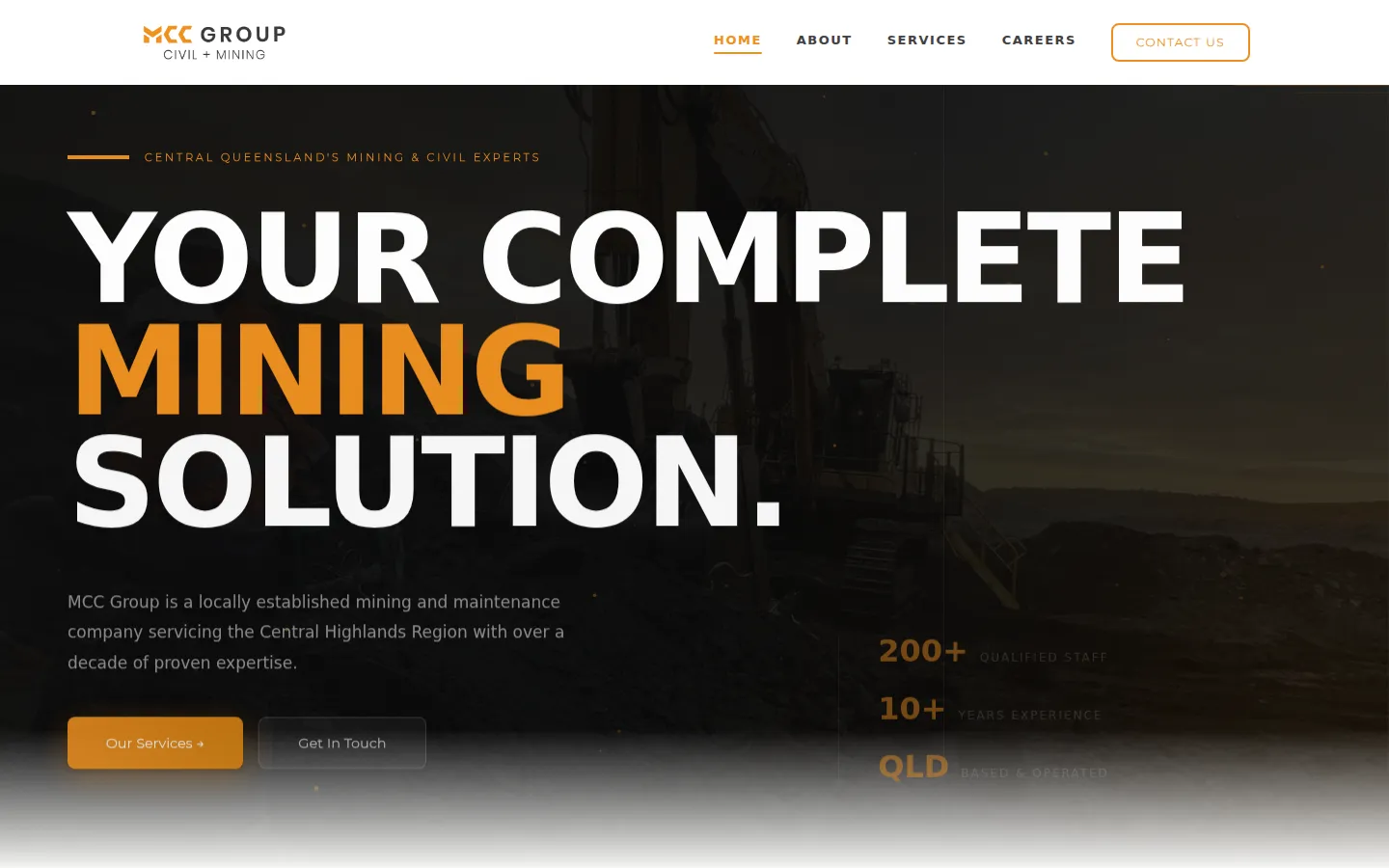
MCC Group's careers process is a working example: behind what looks like a simple job-application form sits an AI-powered pre-screening flow built specifically for a $100M mining services company handling high applicant volumes across Central Queensland. That's the shape of most custom software work: a process that's specific enough to your business that nothing off-the-shelf fits it properly.
We also build the automations and integrations that sit between systems: the API that lets two tools talk to each other, the internal dashboard that replaces a shared spreadsheet, the tool nobody outside your business would ever need but that saves real hours every week inside it. Warden, one of our own in-house products, is an AI remediation agent, built for exactly this category of problem, where the fix is specific enough that no generic tool was ever going to cover it.
01 /Who It's For
This is for businesses with an internal process that's outgrown spreadsheets and manual work, or that's being forced into a shape it doesn't fit by generic software. If you've caught yourself saying there's no tool that does exactly this, that's usually the signal custom software is the right call rather than another SaaS subscription that gets you 70% of the way there.
It suits operationally complex businesses (trades, mining and industrial services, and anyone running a process specific enough that a general tool keeps falling short) more than it suits a business that just needs a standard workflow with a nicer interface.
02 /What You Get
- A custom-built tool, automation or API scoped specifically to the process you described in discovery
- Integration with the systems you already run, rather than asking you to replace them
- An interface built for the people who'll actually use it daily, usually staff, not customers
- Data handling appropriate to what the tool manages, scoped and documented properly
- Testing against your real workflow and real data, not a generic sample dataset
- Documentation and handover so your team understands what was built and why
- A support arrangement so the tool keeps working as your process evolves
03 /How We Work
Discovery is the most important stage here: understanding the actual process, its exceptions and the reason existing tools don't fit it. Design maps that process into a concrete build plan and interface before development starts. Build delivers the software in working stages against your real workflow, so you're testing against reality rather than a spec document. Launch includes rollout to the people who'll use it daily, with training where it's needed. Support continues afterwards, because a process that changes needs software that changes with it. Custom software abandoned after launch stops fitting the business within a year.
04 /Common Questions
How is custom software different from just buying a SaaS tool?+
A SaaS tool is built for thousands of businesses at once, so it fits your process at best 70-80% of the way. Custom software is built for exactly your process, with no compromise on the parts that don't fit. The trade-off is it costs more upfront and you own the maintenance going forward, which we can also handle.
What kind of business actually needs custom software instead of an app?+
Usually one with a process specific enough that no off-the-shelf tool fits: a particular approvals chain, a scheduling problem shaped by your industry, or several existing systems that need to talk to each other in a way no vendor has built for.
Can custom software integrate with the systems we already use?+
Yes, that's usually the point. Most custom builds sit alongside existing systems (accounting software, CRMs, industry-specific tools) and connect them, rather than replacing everything you've already got working.
Who maintains it after launch, do we need our own developer?+
We offer ongoing support so you're not left holding software nobody in-house can maintain. Some clients bring on their own developer eventually; most keep us on for the maintenance and small changes that come up as the business evolves.
How do you scope something this specific into a fixed quote?+
Discovery does the heavy lifting: we map the actual process before quoting, so the fixed price reflects what we've learned about your real requirements rather than a guess made before we understood the job.
Can you build the automation without touching our core systems?+
Usually yes, most automations sit alongside your existing accounting, CRM or operations software and connect to them through an API, rather than requiring changes inside systems you already rely on and don't want to risk.
05 /Proof, Not Promises
Ready when you are
Tell us about the project and we'll come back with a straight answer on approach, timeline and cost.
Let's Talk